
Play Wizard of Oz Road to Emerald City Now!
Home → Strategy
Wizard of Oz Road to Emerald City Strategy
Approaching Wizard of Oz Road to Emerald City sensibly
WMS Gaming released Wizard of Oz Road to Emerald City in 2017 with a medium volatility profile that balances risk and reward for high rollers. This specific design choice ensures that the 95.95% RTP is approached over extended play sessions rather than through sporadic large wins. Consequently, serious players must prepare for longer dry spells while waiting for the statistical edge to manifest in their bankroll management strategy.
The game operates on a compact 3x3 grid featuring 9 betways, which differs significantly from the high-volatility Alles Spitze developed by Merkur. While Alles Spitze offers a 90.85% return with high variance, this WMS title provides a more stable mathematical environment for managing larger stakes. High rollers benefit from this stability as it reduces the likelihood of rapid bankroll depletion during standard gameplay rotations.
Unlike crash games or titles with cash-out buttons, Wizard of Oz Road to Emerald City requires players to endure the full spin cycle without intervention. The absence of manual stop mechanisms means the 4.05% house edge remains constant regardless of player actions or timing decisions. This structural rigidity demands strict discipline from high-stakes participants who cannot alter the built-in mathematical advantage through gameplay choices.
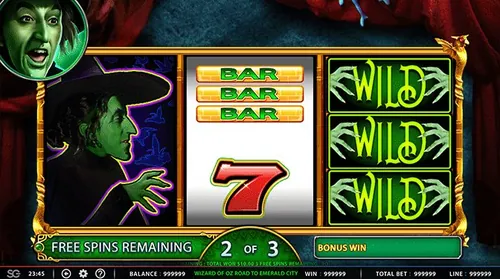
Bankroll rules that hold up
A sustainable bankroll for Wizard of Oz Road to Emerald City should be calculated using the maximum bet of 70 per session limit. If a high roller allocates 7,000 for a session, this allows for exactly 100 spins at the highest possible stake level before funds are exhausted. This calculation provides a clear upper bound on exposure while maintaining engagement with the most lucrative paylines available in the base game.
The theoretical return of 95.95% implies a long-term loss rate of 4.05% on total wagered amounts, which directly impacts bankroll longevity. For every 1,000 wagered across multiple sessions, the expected loss equals 40.50 due to the mathematical house edge inherent in the slot mechanics. High rollers must account for this percentage when projecting potential profits versus actual realized returns over hundreds of thousands of spins.
Compared to Alles Spitze which carries a higher 90.85% RTP, Wizard of Oz Road to Emerald City retains more capital over extended periods despite lower max win caps. The 500x multiplier on Alles Spitze does not offset its inferior return percentage for players focusing on volume rather than jackpot chasing. Therefore, maintaining a larger initial bankroll is essential to withstand the variance associated with this specific medium volatility title.
Bet sizing against volatility
The minimum bet of 0.35 allows for extensive testing of the sticky wilds feature without significant financial commitment during early exploration phases. However, high rollers typically bypass this range to maximize the impact of expanding symbols and multipliers that drive substantial payouts in later rounds. Starting at higher stakes accelerates the activation of character-based bonus rounds involving Dorothy, Scarecrow, Tin Man, and the Lion.
Medium volatility suggests that wins occur with moderate frequency, requiring bet sizes that can absorb occasional losing streaks between feature triggers. Placing bets near the 70 cap ensures that each spin contributes meaningfully to the overall return percentage while minimizing the total number of spins needed. This approach aligns with the mathematical expectation of hitting winning combinations more efficiently compared to low-stake strategies that prolong the grind.
In contrast to high-volatility titles like Alles Spitze where big wins are rare, Wizard of Oz Road to Emerald City offers more consistent mid-tier payouts. The 9 betways structure distributes winning potential across multiple symbol combinations, reducing the reliance on single massive hits for profitability. High rollers benefit from this distribution as it supports steadier bankroll growth through frequent smaller wins rather than unpredictable jackpots.
Using progressive staking after losses does not alter the fixed 95.95% RTP but drastically increases the risk of ruin by escalating exposure. Raising stakes following a deficit only shortens the time until the bankroll is depleted because the house edge remains unchanged on every individual spin. Maintaining flat betting at a consistent level preserves capital integrity and allows the statistical advantage to work in favor of the player over time.
Session limits worth setting
Setting a strict time limit prevents fatigue-induced errors when playing Wizard of Oz Road to Emerald City at high stakes for extended periods. Since the game lacks auto-stop features, players must manually enforce boundaries to avoid exceeding predetermined financial thresholds during peak excitement moments. A two-hour session at average bet sizes helps maintain focus on strategic decision-making rather than emotional reactions to random outcomes.
The 300% welcome bonus up to 2,000 plus 100 free spins provides additional value but introduces complex wagering requirements that extend session duration. Players must complete these conditions through repeated spins, effectively increasing the total number of rounds played beyond initial recreational intentions. Understanding these terms is crucial for high rollers who wish to convert bonus funds into withdrawable cash without violating platform rules.
Unlike Alles Spitze which may require fewer spins to trigger its max win due to high volatility, Wizard of Oz Road to Emerald City demands patience to realize its full potential. Setting a loss limit based on the 4.05% house edge ensures that sessions end before variance negatively impacts long-term profitability projections. This disciplined approach protects the bankroll from erratic swings typical of medium volatility slots with complex feature sets.
Why chasing losses fails
Chasing losses in Wizard of Oz Road to Emerald City ignores the immutable reality that each spin has an independent probability determined by the RNG. Increasing bets after a deficit does not change the 95.95% RTP or improve the odds of triggering sticky wilds or expanding symbols on subsequent rounds. This misconception leads to rapid bankroll erosion as the house edge compounds with every additional wager placed under emotional duress.
The medium volatility of this WMS title means that losing streaks are statistically inevitable and do not signal an impending payout correction. Unlike progressive systems in table games, slot mechanics offer no memory of previous outcomes, making past results irrelevant to future spin probabilities. High rollers who attempt to recover losses by raising stakes often exceed their predefined limits, resulting in significant financial damage within minutes.
Comparing this behavior to playing Alles Spitze reveals similar risks, as the 90.85% RTP also punishes erratic betting patterns regardless of volatility differences. No amount of increased stake size can overcome the mathematical disadvantage inherent in any casino game with a positive house edge. Sustainable success requires accepting losses as part of the entertainment cost rather than attempting to manipulate outcomes through flawed strategic adjustments.
Wizard of Oz Road to Emerald City: key facts
| Parameter | Value |
|---|---|
| Game | Wizard of Oz Road to Emerald City |
| Studio | WMS Gaming (Williams Interactive; now Light & Wonder) |
| Released | 2017 |
| RTP | 95.95% |
| House edge | 4.05% |
| Volatility | medium |
| Reels | 3x3 grid |
| Paylines / ways | 9 betways |
| Bet range | 0.35 – 70 |
Common systems and their limits
Wizard of Oz Road to Emerald City offers 9 betways on a compact 3x3 grid, which restricts the complexity of any betting progression compared to multi-reel formats. This limited structure means that standard flat-lay strategies cannot leverage diverse payline combinations to smooth out variance during a session. Players relying on complex pattern recognition will find fewer opportunities for statistical adjustment than those playing larger grid slots.
The game features Sticky Wilds and Expanding Symbols that trigger character-based bonus rounds, creating sudden volatility spikes rather than steady returns. These mechanics allow for significant payout bursts but do not alter the underlying house edge of 4.05% per spin. High rollers must accept that these features are random events rather than predictable outcomes of a specific betting sequence.
Flat betting explained
A fixed stake of 70 € represents the maximum entry point for Wizard of Oz Road to Emerald City, allowing high rollers to maintain consistent exposure without adjusting wagers after losses. This approach preserves bankroll stability over thousands of spins by eliminating the emotional distortion of chasing deficits. The theoretical return remains constant at 95.95% regardless of whether the player bets the minimum or the maximum allowed amount.
Comparing this to Book of Dead, which operates with high volatility and 5x3 reels, the 3x3 layout of Wizard of Oz provides more frequent small wins despite lower overall variance. Flat betting on Wizard of Oz reduces the risk of rapid ruin associated with aggressive staking systems. The 9 betways ensure that every spin has a defined probability of hitting a winning combination.
Progressive staking risks
Increasing stakes after losses in Wizard of Oz Road to Emerald City accelerates the depletion of a bankroll due to the built-in 4.05% house edge. Since the game does not offer a cash-out button or crash mechanic, players cannot lock in profits during positive streaks. Progressive staking only shortens the time until ruin because the expected value remains negative on every individual spin.
The medium volatility setting means that losing streaks can last longer than in high-variance titles like Book of Dead, which hits big wins less frequently. A player using progressive staking on Wizard of Oz faces extended periods of drawdown before the RTP stabilizes over hundreds of thousands of spins. The max win potential is constrained by the 3x3 grid, limiting the recovery power of doubled bets.
What the maths actually allows
With an RTP of 95.95%, Wizard of Oz Road to Emerald City retains 4.05% of all wagered money as the casino's mathematical advantage over the long term. For a high roller betting 70 € per spin, this translates to an average loss of 2.83 € per spin before any feature triggers. The free spins and multiplier features provide the mechanism for this return but do not guarantee profitability in short sessions.
The release year of 2017 indicates that the algorithm relies on established WMS Gaming principles rather than modern high-volatility designs. Unlike Book of Dead with its 96.21% RTP, Wizard of Oz offers a slightly lower theoretical return, requiring higher volume to overcome the edge. The 3x3 reel layout simplifies the paytable but caps the maximum possible payout per line compared to five-reel slots.
Reading variance honestly
Medium volatility in Wizard of Oz Road to Emerald City balances the frequency of wins against their size, preventing extreme bankroll swings common in high-variance games. This stability suits high rollers who prefer controlled exposure over the all-or-nothing nature of slots like Book of Dead. The 9 betways ensure that even non-winning spins often result in near-misses that sustain engagement without depleting funds rapidly.
The sticky wilds and expanding symbols create clusters of wins that temporarily offset the house edge, but these are bounded by the 3x3 grid constraints. High rollers must recognize that these features are random distributions rather than skill-based opportunities to influence outcomes. The theoretical return of 95.95% applies only over millions of spins, making short-term results highly unpredictable.
Learning the game in demo first
WMS Gaming released Wizard of Oz Road to Emerald City in 2017 as a medium volatility slot featuring a compact 3x3 grid layout with 9 betways. This structure limits the visual complexity compared to standard five-reel titles, requiring players to focus on the core mechanics rather than complex payline patterns. High rollers should note that the simplified reel setup allows for faster spin cycles, which can accelerate bankroll depletion if stakes are not carefully managed during free spins.
The theoretical return to player is set at 95.95%, meaning the house edge stands at 4.05% over an extended period of gameplay. This percentage indicates that for every one hundred units wagered, the game retains approximately four units as profit for the operator in the long run. Understanding this mathematical foundation is crucial for managing expectations, as short-term variance can mask the underlying statistical disadvantage inherent in the game design.
In contrast, Big Bass Splash by Pragmatic Play offers a higher RTP of 96.71% and high volatility, providing different risk parameters for experienced players. While Wizard of Oz Road to Emerald City maintains a stable medium volatility profile, the other title delivers larger but less frequent payouts due to its distinct mathematical model. Comparing these metrics helps analysts evaluate which game aligns better with specific high-stakes strategies and bankroll management techniques.
Sticky Wilds and Expanding Symbols are key features that can trigger significant wins within the base game or bonus rounds without altering the fundamental odds. These mechanics add excitement but do not change the built-in house edge, so players must rely on disciplined staking rather than feature reliance. Recognizing this distinction prevents unrealistic expectations about winning frequency and encourages a more analytical approach to session planning.
Adjusting stakes to your budget
The betting range for Wizard of Oz Road to Emerald City spans from 0.35 to 70 per spin, accommodating various stake levels. High rollers typically operate near the upper limit of this range to maximize potential returns while accepting the associated increase in variance. Setting a precise budget before playing ensures that losses remain within acceptable financial boundaries, preventing impulsive decisions during volatile streaks.
A flat betting strategy involves maintaining the same stake every round, which helps control the rate of bankroll erosion over time. Progressive staking, such as raising bets after losses, does not alter the house edge and often leads to rapid ruin by increasing exposure during downturns. Analyzing historical data suggests that consistent betting preserves capital longer, allowing players to weather the inevitable swings of medium volatility games.
When comparing costs, a 70 unit stake per spin on Wizard of Oz Road to Emerald City consumes funds significantly faster than lower-stakes alternatives. For instance, spinning at the maximum rate for one hour could result in substantial turnover depending on the speed of play and hit frequency. Calculating total expected loss based on the 4.05% house edge provides a clear picture of potential financial outcomes over extended sessions.
Bonus terms may include a 300% welcome bonus up to €2,000 plus 100 free spins, which can extend playtime if wagering requirements are met. However, these incentives often come with strict conditions that affect real-money withdrawal eligibility, requiring careful review before depositing. Integrating bonus funds into bankroll calculations requires understanding how they interact with the game's RTP and volatility characteristics.
Recognising a bad session
Medium volatility in Wizard of Oz Road to Emerald City implies moderate fluctuations in bankroll, where losing streaks can persist without major payouts. Tracking consecutive non-winning spins helps identify when variance exceeds typical expectations, signaling a potential shift in session trajectory. High rollers must distinguish between normal statistical noise and anomalous runs that warrant immediate stake reduction or session termination.
The 95.95% RTP ensures that over hundreds of thousands of spins, returns converge toward this theoretical average, but short-term results vary widely. A session lasting several hours with minimal hits despite high stakes may indicate unfavorable variance rather than game malfunction. Analysts recommend setting loss limits based on total bankroll percentage to prevent emotional decision-making during prolonged dry spells.
Compared to Big Bass Splash, which offers a max win of 5000x and high volatility, Wizard of Oz Road to Emerald City provides smaller but more frequent wins. The latter’s 9 betways limit the potential for massive single-spin payouts compared to multi-line slots with higher multiplier caps. Recognizing these structural differences helps players adjust their tolerance for drawdowns and avoid chasing losses in games with lower upside potential.
Sticky Wilds and Free Spins features can temporarily boost returns, but they do not guarantee recovery of previous losses due to the fixed house edge. If bonus triggers occur infrequently, the overall session performance may fall below the expected RTP, highlighting the importance of patience. Monitoring feature activation rates against theoretical probabilities provides objective data for evaluating session health beyond simple win/loss metrics.
Stopping while ahead
High rollers often aim to secure profits during positive variance periods in Wizard of Oz Road to Emerald City, given its medium volatility profile. Extracting winnings early preserves capital and reduces exposure to the 4.05% house edge during subsequent losing streaks. Defining clear profit targets before playing establishes a disciplined exit strategy, preventing greed from eroding gains during extended sessions.
The 70 unit maximum bet allows for aggressive play, but continuing to wager after achieving significant wins increases the risk of reversing profits. Statistical models suggest that locking in a portion of earnings mitigates the impact of future variance, ensuring long-term sustainability. Players should calculate break-even points relative to their initial bankroll to determine optimal stopping thresholds based on personal risk appetite.
In contrast, Big Bass Splash’s high volatility means winners may experience larger swings, making timely exits even more critical for capital preservation. Wizard of Oz Road to Emerald City’s structured bonus rounds offer predictable payout opportunities, but relying on them for sustained growth ignores the underlying negative expectancy. Setting automated alerts for profit milestones helps enforce discipline without manual intervention during fast-paced gameplay.
Free Spins and Multipliers can generate substantial short-term gains, but these events are random and cannot be predicted or controlled by skill. Accepting that luck plays a dominant role in outcome variability encourages rational decision-making regarding when to conclude a session. Documenting win amounts and timing provides valuable data for refining future strategies and improving overall bankroll management efficiency.
Responsible play in practice
Bankroll management remains essential for high rollers engaging with Wizard of Oz Road to Emerald City, especially given the 0.35 to 70 betting range. Allocating a fixed amount for each session prevents overspending and ensures that losses remain within predefined financial limits. Treating gambling as entertainment rather than income generation aligns with responsible gaming principles and reduces psychological pressure during play.
The 95.95% RTP and 4.05% house edge highlight the mathematical reality that operators retain a portion of all wagers over time. Understanding this permanent advantage discourages chasing losses or employing risky progressive staking systems that amplify downside risk. Educating oneself on these fundamentals fosters realistic expectations and promotes healthier attitudes toward money spent on casino games.
Bonus terms like the 300% welcome bonus up to €2,000 plus 100 free spins require attention to wagering requirements before withdrawals are possible. Failing to meet these conditions can result in forfeited bonuses and associated winnings, emphasizing the need for thorough review prior to participation. Integrating bonus analysis into bankroll planning ensures that promotional offers enhance rather than complicate financial outcomes.
Time limits and self-exclusion tools provide practical mechanisms for maintaining control over gambling habits when using platforms hosting Wizard of Oz Road to Emerald City. Setting daily or weekly spending caps helps prevent impulsive behavior driven by frustration or euphoria during variable outcomes. Regularly reviewing account activity and adjusting limits accordingly supports sustainable engagement with online casino content.
DemoRTP & VolatilitySymbols & PayoutsBonus FeaturesStrategyBonusesMobileDownload & AppMax WinSimilar GamesReviewFAQSitemap
Wizard of Oz Road to Emerald City 2026