Play Wizard of Oz Road to Emerald City Now!
Home → Bonus Features
Wizard of Oz Road to Emerald City Bonus Features
Bonus features of Wizard of Oz Road to Emerald City
The developer WMS Gaming released Wizard of Oz Road to Emerald City in 2017 with a medium volatility setting that balances risk and reward for high rollers seeking consistent engagement during extended play sessions on the 3x3 grid.
This title operates with an RTP of 95.95%, establishing a theoretical house edge of 4.05% over millions of spins, which is notably higher than the 90.85% return found in Alles Spitze by Merkur, affecting long-term bankroll sustainability for serious players.
High stakes enthusiasts can wager up to 70 per spin on the 9 betways, allowing substantial exposure to sticky wilds and expanding symbols that trigger character-based bonus rounds featuring Dorothy or the Scarecrow within the core gameplay loop.
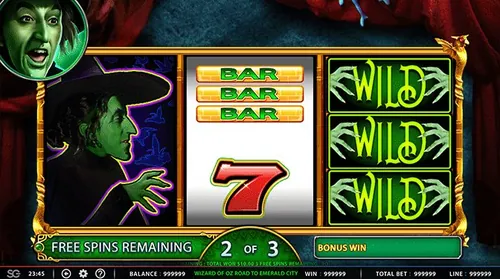
Free spins round
Entering the free spins mode in Wizard of Oz Road to Emerald City requires landing specific scatter symbols, which unlocks a sequence where multipliers apply to all wins generated during the feature, enhancing potential payouts significantly for those betting at the upper limit.
In contrast to Alles Spitze by Merkur which offers a max win cap of 500x, this WMS slot allows for potentially unlimited returns through its expanding symbol mechanics, provided the player maintains their bet size near the 70 maximum allowed per single spin attempt.
The duration of the free spins feature depends on the number of triggering scatters, but each awarded spin retains the sticky wild properties from the base game, ensuring that high roller bets continue to generate value even without additional active payline hits.
Trigger conditions
To activate the primary bonus events in Wizard of Oz Road to Emerald City, players must land three or more special symbols anywhere on the 3x3 reel layout, which immediately initiates the corresponding character-themed mini-game such as the Tin Man or Lion adventures.
The probability of hitting these triggers is influenced by the medium volatility profile, meaning wins occur less frequently than in low variance games but offer larger payouts, unlike Alles Spitze by Merkur which has high volatility and a fixed 500x max win ceiling for similar events.
Each trigger event consumes one or more spins from the total count, and because the minimum bet is 0.35 while the maximum reaches 70, the cost of attempting to reach these conditions varies drastically based on the chosen stake level selected by the user.
Retriggers and extensions
Retrigging the free spins in Wizard of Oz Road to Emerald City occurs when new scatter symbols appear during the active bonus round, adding extra spins to the remaining count and keeping the multiplier mechanics active for subsequent winning combinations on the reels.
Unlike Alles Spitze by Merkur which caps total returns at 500x regardless of retrigger attempts, this WMS title allows the win potential to grow indefinitely through repeated expansions, provided the player sustains their high-stakes strategy throughout the entire extended session duration.
The extension mechanism relies on the random generation of additional scatters, which adds value to every spin without increasing the base bet, allowing high rollers to maximize their exposure to the 95.95% RTP over a longer period than a standard single-spin outcome provides.
Multiplier mechanics
Multipliers in Wizard of Oz Road to Emerald City are applied to winning combinations during both the base game and the free spins feature, scaling the payout amount based on the symbol type and the current state of the sticky wilds on the 3x3 grid interface.
While Alles Spitze by Merkur limits its highest possible payout to a flat 500x multiplier on the total bet, this Light & Wonder release uses variable multipliers that can compound with expanding symbols, creating significantly larger wins for bets placed at the 70 maximum limit.
The application of these multipliers is immediate upon the formation of a valid payline, meaning that a high roller betting 70 per spin could see their potential return increase substantially if multiple wilds align with high-value character icons during a triggered bonus event.
Wizard of Oz Road to Emerald City: key facts
| Parameter | Value |
|---|---|
| Game | Wizard of Oz Road to Emerald City |
| Studio | WMS Gaming (Williams Interactive; now Light & Wonder) |
| Released | 2017 |
| RTP | 95.95% |
| House edge | 4.05% |
| Volatility | medium |
| Reels | 3x3 grid |
| Paylines / ways | 9 betways |
| Bet range | 0.35 – 70 |
Bonus buy option
Wizard of Oz Road to Emerald City does not offer a direct bonus buy feature, which distinguishes it from high-roller titles that prioritize instant access to volatile rounds. This structural limitation forces players to engage with the base game mechanics, where the 9 betways and medium volatility dictate the pace of symbol accumulation. High rollers accustomed to purchasing features in other WMS Gaming releases must adjust their strategy to rely on natural trigger events rather than upfront payments.
The absence of a purchase button aligns Wizard of Oz Road to Emerald City with traditional slot design, contrasting sharply with modern video slots that monetize feature access directly. Players cannot bypass the 3x3 grid layout to enter the Sticky Wilds or Free Spins modes immediately, requiring patience during the session. This design choice ensures that the house edge of 4.05% is realized through extended play rather than a single transactional entry fee for bonuses.
In comparison to Book of Dead by Play'n GO, which lacks a standard buy feature but offers high volatility, Wizard of Oz Road to Emerald City provides a more controlled risk profile. The lack of a buy option means high rollers cannot artificially inflate their variance through immediate capital deployment into bonus rounds. Instead, they must accept the game's inherent rhythm, where character-based bonus rounds activate only through specific reel combinations within the 9 betway structure.
Cost of buying the feature
Since Wizard of Oz Road to Emerald City excludes a bonus buy mechanic, there is no explicit monetary cost associated with acquiring free spins or sticky wild features. This absence eliminates the premium pricing often seen in other slots where players pay multiples of their stake to skip the base game. High rollers benefit from this structure as they avoid paying inflated rates for feature access, keeping their bankroll management focused on standard bet sizes ranging from 0.35 to 70.
The financial implication of this design is that the effective cost of entering a bonus round is embedded within the regular spin outcomes and the 95.95% RTP. Unlike games where a buy feature might cost 100x the bet, here the investment remains strictly tied to the wager per spin, which can reach up to 70. This approach prevents sudden large deductions from the player's balance that are typical when purchasing features in high-variance titles.
Comparing this to Book of Dead by Play'n GO, which also lacks a buy feature but carries a higher volatility and 96.21% RTP, highlights the different value propositions. Wizard of Oz Road to Emerald City relies on its medium volatility and 9 betways to generate returns without extra fees. High rollers analyzing the cost efficiency will note that the lack of a purchase option simplifies the budget calculation, removing variable costs from the equation.
Is the feature buy worth it
The question of whether a feature buy is worth it is moot for Wizard of Oz Road to Emerald City because the mechanism simply does not exist in its architecture. This exclusion means high rollers cannot evaluate the cost-effectiveness of such a purchase against the potential return of the triggered bonus. The game instead demands that players assess the value of the base game itself, where the 3x3 grid and 9 betways provide consistent, albeit smaller, winning opportunities.
Without the option to buy features, the value proposition shifts entirely to the theoretical return of 95.95% over a very long run. High rollers must consider if the medium volatility of Wizard of Oz Road to Emerald City justifies the time spent waiting for triggers compared to games with purchasable bonuses. The decision becomes one of preference for organic gameplay versus the accelerated pacing offered by buy-feature slots, with no financial penalty for waiting.
In contrast to Book of Dead by Play'n GO, where the absence of a buy feature allows players to control their variance through bet sizing alone, Wizard of Oz Road to Emerald City offers a similar constraint. The latter’s 95.95% RTP and medium volatility provide a steady stream of interactions with characters like Dorothy and Scarecrow. High rollers seeking predictable returns may find the lack of a buy option preferable to managing the unpredictable costs of feature purchases in other titles.
Base game versus bonus returns
Wizard of Oz Road to Emerald City generates returns through a combination of base game wins and triggered bonus features, all governed by its 95.95% RTP. The base game operates on a 3x3 grid with 9 betways, providing frequent small payouts that sustain the bankroll during the session. High rollers using the maximum bet of 70 can expect these base wins to contribute significantly to the overall return, offsetting the longer dry spells typical of medium volatility slots.
The bonus features, including Sticky Wilds and Free Spins, offer the potential for larger payouts but occur less frequently due to the medium volatility setting. These features expand upon the base game mechanics by adding multipliers and character-based rounds involving the Tin Man or Lion. The transition from base game to bonus is critical for high rollers, as the bonus rounds typically yield higher average returns per spin compared to the standard 9 betway configurations.
When comparing the return profiles of Wizard of Oz Road to Emerald City to Book of Dead by Play'n GO, which has a higher 96.21% RTP and high volatility, the difference in payout structure is evident. Wizard of Oz Road to Emerald City relies on a balanced mix of base and bonus returns, whereas Book of Dead leans heavily on rare, high-value bonus hits. High rollers analyzing this distinction will note that the former offers more consistent engagement with its 9 betways and character features.
Feature frequency in practice
Feature frequency in Wizard of Oz Road to Emerald City is dictated by its medium volatility and the underlying mathematics of its 9 betways. High rollers playing at the maximum bet of 70 will experience bonus triggers at a rate consistent with the game’s medium risk profile, avoiding the extreme droughts of high-volatility slots. The 95.95% RTP suggests that over hundreds of thousands of spins, the return stabilizes around this figure, influenced by the frequency of Sticky Wilds and Free Spins.
The activation of character-based bonus rounds featuring Dorothy, Scarecrow, Tin Man, or Lion depends on specific symbol alignments within the 3x3 grid. Since Wizard of Oz Road to Emerald City lacks a buy option, players must wait for these natural occurrences, which may vary significantly between sessions. High rollers should anticipate that the medium volatility will result in a moderate number of bonus activations, providing enough entertainment value without excessive waiting periods.
Compared to Book of Dead by Play'n GO, which exhibits high volatility and thus lower feature frequency despite its 96.21% RTP, Wizard of Oz Road to Emerald City offers more regular bonus engagements. The latter’s medium volatility ensures that the 9 betways and expanding symbols trigger more often, maintaining player interest through consistent interaction. High rollers prioritizing frequent feature activation over massive, infrequent jackpots may prefer the steady pace of Wizard of Oz Road to Emerald City.
Special mechanics of this title
Wizard of Oz Road to Emerald City operates on a compact 3x3 grid with 9 betways, creating a focused betting environment for high rollers who prefer simplicity over complex payline structures. The medium volatility rating suggests a balanced risk profile, offering frequent small wins interspersed with larger payouts, which suits players managing substantial bankrolls across multiple sessions. This structural design ensures that every spin contributes directly to the theoretical return without unnecessary complexity or distracting side mechanics.
The Sticky Wilds feature serves as a core mechanic where winning symbols lock in place for subsequent spins, potentially creating chain reactions that multiply payouts significantly during a single base game round. Expanding Symbols further enhance these opportunities by growing to cover entire reels when involved in a win, thereby increasing the probability of hitting higher-value combinations within the limited three-reel layout. These combined features create a dynamic gameplay loop that rewards patience and strategic betting on each available betway.
How the studio built the maths
WMS Gaming, now part of Light & Wonder, engineered Wizard of Oz Road to Emerald City with a precise theoretical RTP of 95.95%, establishing a house edge of 4.05% over extended play periods. This mathematical foundation is calibrated for medium volatility, ensuring that variance remains manageable for high-stakes players while still allowing for significant win potential through its specific symbol weighting and multiplier algorithms. The developer’s expertise in classic slot architecture is evident in the careful balancing of hit frequency against payout size.
In contrast to Big Bass Splash, which offers an RTP of 96.71% and high volatility across five reels, Wizard of Oz Road to Emerald City provides a tighter control loop with its nine betways and lower variance. The 95.95% return rate is slightly below industry averages but compensated by the unique character-based bonus rounds that activate randomly, adding layers of unpredictability to the standard spin outcome. This deliberate choice by WMS Gaming targets players seeking consistent engagement rather than extreme jackpot chases.
The release year of 2017 marks a period where studios were refining mid-tier slots to appeal to both casual and serious gamers, resulting in Wizard of Oz Road to Emerald City’s robust mathematical model. The inclusion of multipliers during free spins and base game wins allows for exponential growth in winnings, provided the player maintains optimal bet sizing relative to their total bankroll. Such design choices reflect a deep understanding of player psychology and long-term retention strategies employed by leading developers.
Feature variants and levels
Wizard of Oz Road to Emerald City includes four distinct character-based bonus rounds featuring Dorothy, Scarecrow, Tin Man, and Lion, each offering unique interactive elements that diverge from standard free spin modes. These mini-games are triggered randomly during base play, providing immediate engagement opportunities that break the monotony of spinning the 3x3 grid and add narrative depth to the otherwise mechanical experience. Each character presents different reward structures, ensuring variety even within the constrained reel format.
The Free Spins feature acts as a primary progression level where sticky wilds remain active throughout the duration, significantly boosting the potential for large payouts per session compared to non-sticky alternatives. Multipliers applied during these spins can escalate rapidly, turning modest wins into substantial sums if lucky symbol alignments occur frequently enough within the allotted spin count. This mechanic requires players to adjust their bet levels dynamically to maximize returns during these high-variance periods.
Unlike Big Bass Splash’s straightforward fishing bonus, Wizard of Oz Road to Emerald City integrates thematic elements directly into its feature set, requiring players to engage with characters rather than just collecting symbols. The 7th WMS Wizard of Oz title builds upon previous iterations by refining trigger conditions and enhancing the visual feedback during these special events, making them more impactful for high rollers seeking immersive yet mathematically sound bonus experiences. This integration ensures that every bonus feels distinct and valuable.
What the bonus can pay
The maximum win potential in Wizard of Oz Road to Emerald City is derived from combining sticky wilds, expanding symbols, and multipliers during the free spins round, creating scenarios where bets can yield substantial returns. With a bet range spanning from 0.35 to 70 units, high rollers placing maximum wagers have the highest ceiling for payouts, though the actual amount depends heavily on luck and symbol distribution across the 9 betways. This variability necessitates strict bankroll management to withstand dry spells between big hits.
Compared to Big Bass Splash’s capped max win of 5000x, Wizard of Oz Road to Emerald City does not explicitly state a hard cap, implying that unlimited potential exists theoretically through consecutive sticky wild expansions. However, the medium volatility nature means that such extreme outcomes are statistically rare, requiring players to accept lower frequency of large wins in exchange for more consistent smaller payouts. This trade-off is typical for slots designed around engaging mechanics rather than pure jackpot chasing.
The 300% welcome bonus up to €2,000 plus 100 free spins offered by casinos hosting Wizard of Oz Road to Emerald City can extend playtime significantly, allowing players to explore the full range of feature interactions. Using these funds wisely involves adjusting bet sizes to match the bonus wagering requirements, ensuring that the theoretical RTP of 95.95% is approached over many spins rather than few. Strategic use of free spins can mitigate losses during the initial phases of playing the title.
What the feature costs in practice
Playing Wizard of Oz Road to Emerald City at the maximum bet of 70 units per spin represents a significant investment, consuming 70 units of bankroll with every rotation of the 3x3 grid. Over a hundred spins, this totals 7,000 units, highlighting the importance of setting loss limits before engaging with the game’s medium volatility profile. High rollers must calculate their endurance based on this burn rate to ensure they remain in the game long enough to trigger beneficial features like sticky wilds.
The cost of triggering character-based bonuses is embedded in the regular spin outcomes, meaning no additional fee is paid beyond the standard bet range of 0.35 to 70 units. Random activation ensures fairness, but also means that players cannot predict exactly when these lucrative segments will begin, requiring patience and discipline during prolonged sessions. This randomness adds an element of suspense, keeping players engaged despite the financial stakes involved in each individual spin.
Considering the house edge of 4.05%, every unit wagered on Wizard of Oz Road to Emerald City carries an expected loss of 0.0405 units over the long term, regardless of short-term wins. For high rollers utilizing the 300% welcome bonus up to €2,000, this edge applies to the bonus funds as well, necessitating careful tracking of turnover to meet wagering requirements efficiently. Understanding this mathematical reality helps players manage expectations and avoid chasing losses during inevitable downswings.
DemoRTP & VolatilitySymbols & PayoutsBonus FeaturesStrategyBonusesMobileDownload & AppMax WinSimilar GamesReviewFAQSitemap
Wizard of Oz Road to Emerald City 2026